

Half Dome Hike Permits Distance Risks and Best Time
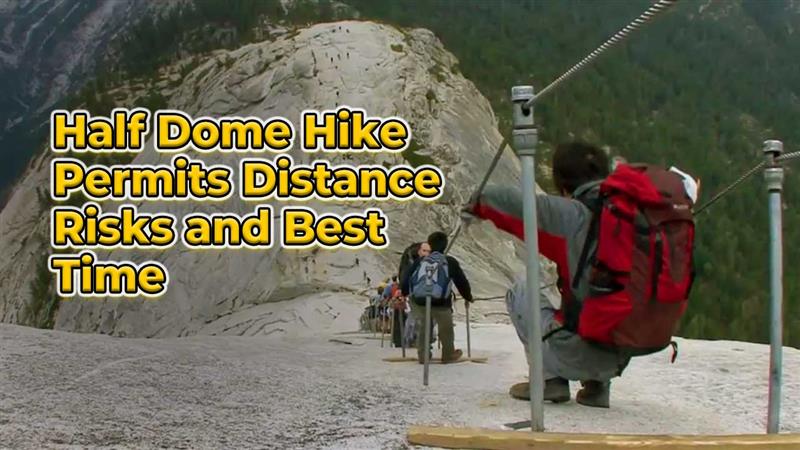
Half Dome in Yosemite National Park is one of the most challenging and iconic hikes in the USA. It is big, shaped like a rock, the steep cable way, and high up gives it a hike you will never forget. But it is a hard and sometimes risky hike, so it is important to know about the permits, how far, the risks, and when it is best to enjoy it. This guide is all about that. It explains everything, and it will tell you what you need to know so you can get ready and have fun on the Half Dome hike.
Introduction to Half Dome
The Half Dome is made of granite. It is located in Yosemite National Park and is known for its unique granite shape. One side looks smooth, but the other side is a rocky wall that is 8846 feet high and attracts many hikers each year. It is one of the most famous rock formations in the USA and gets a lot of attention for its trail and cable climbing.
Geology and Rock Type of Half Dome
Half Dome is made from tough, old rock that was pushed up from Earth long ago. The effects of climate molded it into the dome shape we see today. Half Dome consists of granite.
- It was created 84-87 million years ago. It came from the Sierra Nevada bath
- 99 years ago, it was part of the large Sierra Nevada bath
- The dome shape came from exfoliation, where the rock was peeled away
- Glacial carving during the ice age made its steep wall
How Long is the Half Dome Hike
The Half Dome Trail is long and hard. A lot of people train for it for months. When you complete depends on your good health, the route you pick, and whether the cables are crowded. Many individuals start before sunrise to avoid hiking back in the dark or getting stuck in clouds in the afternoon.
Distance and Time
The Half Dome hike can be long or short, either on the Mist Trail or the John Muir Trail. No matter which route you take, it is one of the hardest day hikes in the country.
- The hike is 14-17 miles long, all depending on which trail you choose.
- Most hiking it in 10-14 hours.
- It's tough with so long a pull for 5,000 ft.
- Backpackers can break up this hike by camping at Little Yosemite Valley.
Half Dome Hike Permits
Permits are needed cause Half Dome gets a lot of people, and it can get unsafe when too many people climb the cables. The National Park Service uses a daily permit system to control crowding and keep hikers safe. It keeps you safe, it makes it less crowded, and it keeps the world clean for all.
Types of Half Dome Permits
There are two main types of Half Dome lottery permits: the Preseason pick and the daily tickets. Both ones you need to think about when you can get on, when the date is, and if you have to pay a little bit. If you can not get a permit, then you can not go up the subdome or the cables.
Preseason Lottery
- Open each year from March 1-31.
- You can put in for up to six people and pick seven dates.
- It's coming out in mid-September.
- You pay a ten-dollar application cost and ten dollars for each hiker if you get it.
Daily Lottery
- Put in two days before your hike.
- You get the ankling later that same day.
- You can only put one permit holder on one application.
- This makes it perfect for the flexible hikers to get last-minute access.
Backpacking Permit Option
Backpackers who are to stay the night in the wild of Yosemite can add a permit to climb Half Dome to any of their wild of Yosemite reservation sites. It is good for people who want a slower climb over two days.
- You must have an entry into the trailheads that fit into the Half Dome.
- You pay the same $10 fee when you pick up your permit.
- You can not use these permits for day tripping.
- This option lowers the distance and danger of the peak day.
Best Time of Year to Hike Half Dome
A suitable time is an important part of the Half Dome hike. The climate, paths, and people vary over the year. The cables are only put up at a certain time, so timing can shape your whole trip.
Best and Hardest Time of Year
Usually, hikers favor the summer because it is pleasant and the paths are dry. But this is the most full-time. Earlier in the season and later in the season have fewer people, but it can rain and snow more often then in the time in the middle of the season.
- The best time to hike is late June to early September.
- The path is neat after the snow, and the weather is warm.
- In the summer, thunderstorms happen a lot during the day, so start early.
- Yosemite says not to go in the winter because there is ice, snow, and icy trails that are safe to hike on.
- The cables are usually up from late May to mid-October, but it depends on the snow.
Can You Hike Half Dome at Night?
Some hikers start it at night so as to avoid a great number of people in cold weather in the dark, or watch the sun come up from the top. Night hiking is fine, but it is with more safety than a normal hike; you have to be ready for all the things that can come up. You will need heavy lights or lamps, or something to see and know the weather you'll be in.
Half Dome Night Hiking: Safety Tips and Guidelines
Hiking in the dark is hard, even on clear trails. White stones and steep land can make some hikers lose their way. It will be safer if you are prepared for it.
- You will need a half-dome pass 24/7, day and night, too.
- The rangers may check at any time of day or night that you are not on the trail or cable during the day or night.
- Everyone will need a good headlamp or glow and backup lights.
- Phone lights will not be enough for the trail or the cables.
- It will be much harder to see the cable at night, and the wind will be cold, so you need to get ready whenever you get on the trail.
- A map you have, or a partner who knows the trail is best.
Risks and Deaths on Half Dome
Half Dome is not a safe hike. It has steep hills, a long trail, and the weather changes. It is considered one of the most difficult and risky hikes in Yosemite National Park. Understanding the risks is essential for staying safe on the trail. Accidents can still happen, which is why proper preparation is important. Most times, there are no deaths, but sometimes deaths will happen in bad weather.
Causes of Half Dome Accidents and Death Statistics
Many incidents happened on Half Dome as visitors had no idea the weather to change, especially rain and lightning. Wet granite is sleek. The storms come fast and hit people. Let’s see the following records!
- There have been about 31 people recorded dead on the Half Dome since 1930.
- 11 people died from falling off the cable while hiking.
- Lightning has killed some people, even on top of the mountain.
- Accidents happen due to wet rock or storm.
- People can have heart attacks.
- There are about 60 people dead over all holidays, including fallen into the river.
List of Half Dome Deaths
Some of the best-known recent death stories show how the conditions and choices affect the safety. They include falling while it rained, getting hit by bolts of lightning, and slipping when the ropes were down.
- Edward Willems (1972) was hit by lightning at the top of it and died.
- Robert Frith (1985) fell after getting hit by lightning.
- Emily Sandall (2006) slipped when the cables were down, and the rock was wet.
- Manoj Kumar (2009) fell on a stormy day.
- Haley LaFlamme (2011) slipped and fell when she came down in the rain.
- Danielle Burnett (2019) slipped in the light rain.
- Grace Rohloff (2024) fell in a fast storm, and she came down when she slid in the rain.
Deaths Per Year
Half Dome does not have a set number each year. Some years, no one dies, but many years, there are more, depending on the weather and how many people are there.
- In about one to every few years, one person is killed on Half Dome.
- Some years, no one is dead, but in others, more are.
- The wet rock and the lightning make it more risky.
- People with more skill and people who make good choices also have a big part to play.
Conclusion
The Half Dome hike presents distance risks, and the best time guide proves how ready you need to be to do this hike that is hard to do. It is long, hard, but you just get ready and wait to have a great hike in Yosemite. Always look at the weather, get all okay that you can go, go early, and take it slow on the cables because safety comes first.
FAQS
Can dogs go on the Half Dome trail?
No, dogs can't hike on the Half Dome trail. This is for their safety and the safety of all the animals and your pet. Only service animals with the right papers can go in, but not on the wires.
Should beginners hike Half Dome?
Half Dome is not a good choice for a beginner as it is hard and it takes lots of time and strength to get there on the top. It is much longer to hike to the top of Half Dome with elevation gain. So beginners have to hike for a couple of months before they try to hike up to the top of the full dome.
Why are the cables removed in winter?
During winter, the cables are taken down as the way up is so dangerous with snow and ice. The cold makes the granite like a big slide, and the cables are put back up only when the trail is safe again, mostly in late May.